
Asphalt maintenance gets expensive when the treatment doesn't match the problem. A sealcoat over a failed base won't last; a full replacement on pavement that only needed crack filling wastes money. The key question is simple: is the damage on the surface, or in the structure underneath?
Preservation vs. rehabilitation
The Federal Highway Administration separates preventive maintenance — cost-effective treatments for pavement still in good condition — from rehabilitation and reconstruction, which add structure or replace the pavement entirely. FHWA lists crack sealing and thin asphalt overlays among preventive treatments. The same logic applies to parking lots: protect good pavement early, rebuild only what has failed.
The common options, from lightest to heaviest
Crack filling
Fills open cracks to keep water out of the base. Best done early and before sealcoating. Learn more about crack filling.
Sealcoating
A protective surface coating for structurally sound asphalt. It restores appearance and protects the surface but does not add strength. Learn more about sealcoating.
Skin patching
A thin layer of asphalt over localized surface damage where the pavement underneath is still sound.
Overlay or fabric overlay
A new asphalt wearing surface over pavement that is worn across the surface but still serviceable. A fabric interlayer may be added to help slow crack reflection. Learn more about overlays.
Remove and replace
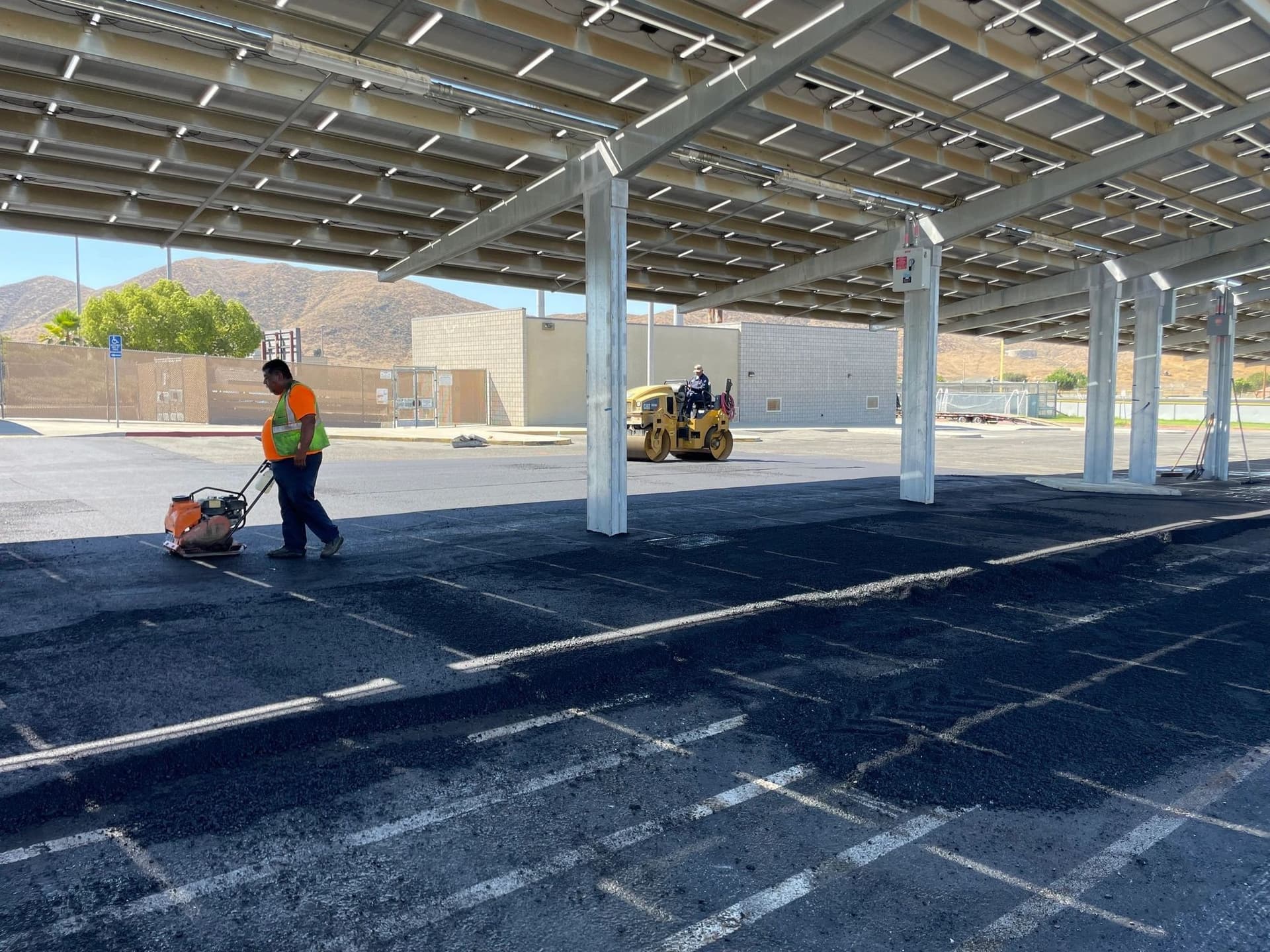
Damaged asphalt is cut out and rebuilt — with base compaction, or base replacement where the base has failed. This is the fix for potholes that keep returning and for alligator cracking. Learn more about pothole repair and patching.
A quick condition check
- Faded, dry-looking surface with few cracks → crack fill and sealcoat.
- Isolated cracks → crack fill.
- Localized surface damage on sound pavement → skin patch.
- Worn or cracked surface across large areas, structure still sound → overlay.
- Potholes, alligator cracking, soft or settling areas → remove and replace with base work.