
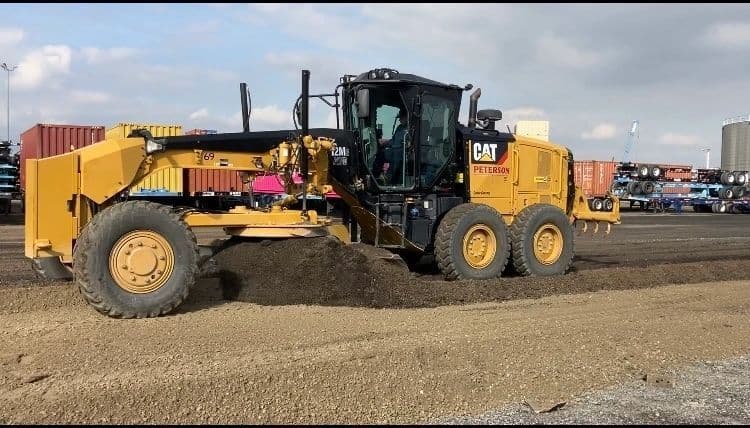
Site grading is the work of shaping the ground to the elevations and slopes a project needs. It happens after earthmoving and before base and pavement — or before a building pad — and it quietly decides two things that matter for decades: where water goes, and how evenly the surface above is supported.
What grading actually does
- Sets slopes so stormwater runs off toward drains, gutters or swales instead of ponding.
- Limits erosion by controlling how and where water moves across the site.
- Creates a level, uniform surface for the base course and pavement.
- Brings the ground to the elevations shown on the plans so edges, curbs and structures line up.
Where grading fits in a project
- Dirt work: clearing, excavation, embankments and hauling move the bulk of the earth.
- Rough grading brings the site close to design elevations.
- Fine grading and compaction prepare the subgrade to tighter tolerances.
- Base material is placed and compacted.
- Asphalt or concrete is installed.
When dirt work, grading and paving are done by one contractor, the drainage intent is carried through each step instead of being handed between trades. See our grading and dirt works services for how we approach it.
Signs grading wasn't done right
- Water standing on pavement long after rain
- Erosion or washouts at pavement edges
- Settlement, dips or cracking in areas that drain poorly
- Water flowing toward buildings instead of away from them
Questions to ask a grading contractor
- Will you handle the dirt work and paving as well, or only grading?
- How will drainage be verified before base and pavement go down?
- Who is responsible for staking and survey layout?
- Is your license active and in good standing? (You can check any California contractor on the CSLB website.)